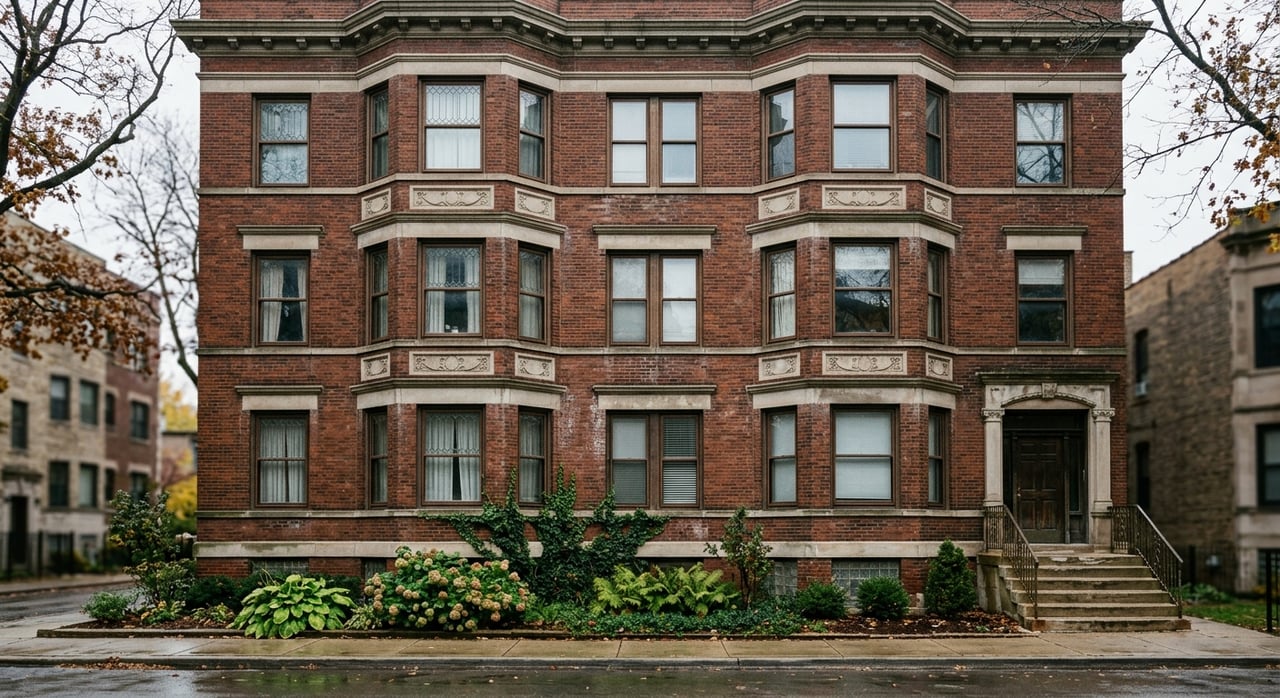
If you are looking for a Chicago neighborhood where a classic three-flat can still make sense as a long-term rental play, West Town deserves a close look. You are dealing with a fast-moving market, older building stock, and a renter-heavy household base, which can create real opportunity if you buy with discipline. In this guide, you will see what the current numbers suggest, which features matter most, and where investors need to be careful before they commit. Let’s dive in.
Why West Town gets investor attention
West Town checks several boxes that buy-and-hold investors usually want to see in a small multifamily market. CMAP reports that 58.1% of housing is renter-occupied, the median age is 33.2, median household income is $141,208, and 40.0% of housing was built before 1940. That combination points to a neighborhood with a meaningful renter base and a large share of older buildings that may offer value-add potential.
The pace of the market also matters. Zillow shows a typical home value of $622,294 and homes pending in about 8 days, while Realtor.com reports a median listing price of $675,000 and a 101% sale-to-list ratio. Even though listing counts vary by platform, the broader story is consistent: inventory is limited and demand is active.
For a buy-and-hold investor, that matters in two ways. First, it can make acquisitions competitive. Second, it can support future liquidity if you decide to refinance, sell to another investor, or market a building to an owner-occupant buyer later on.
Why three-flats fit West Town
Classic Chicago three-flats often work best when the unit mix lines up with real household demand. In West Town, that fit looks stronger for 2-bedroom and 3-bedroom units than for very small studios. CMAP shows that 42.7% of occupied households are two-person households, and 24.8% of housing units are 3-bedroom units.
That data lines up with the neighborhood’s age profile too. CMAP reports that 43.9% of residents are ages 20 to 34, which supports demand from younger renters and household-forming professionals. For investors, that means layout and functionality can matter more than squeezing in the maximum possible unit count.
A three-flat with practical 2BR and 3BR floor plans may have a better long-term rental story than a building with awkward layouts or overly chopped-up spaces. In West Town, usable bedrooms, updated systems, and day-to-day convenience features tend to carry more weight than raw square footage alone.
What current rent signals suggest
Public rent data gives you a useful starting point for underwriting. Apartments.com reports an average West Town rent of $2,171, with studios around $1,810, 2-bedroom units around $3,011, and 3-bedroom units around $3,796. Sample active listings on the same platform included a 2BR at $2,750 and 3BR units at $4,500 and $6,600.
The gap between averages and top-end listings is important. It suggests renovated product can achieve a meaningful premium, especially when the unit offers the finishes and features renters already look for in this part of Chicago. That is where smart renovation planning can materially affect long-term performance.
For a three-flat investor, these rent bands support a simple takeaway: well-executed 2BR and 3BR units appear to be the core of the rental story in West Town. If your deal depends on stretching rents beyond what comparable layouts and finish levels support, the margin for error gets thin very quickly.
What sale listings show about pricing
Sale listings show a wide range, but they also help frame what buyers are paying for. One legal 3-flat at 745 N Throop was listed at $750,000 and described as a long-held asset with flexible upper-floor layouts and a garden apartment. Another example, 948 N California, was asking $925,000 and highlighted 3 units, 3 parking spaces, separate HVAC and utilities, a 2015 remodel, and annual taxes of $13,903.
A separate listing at 1225 W Erie shows a unit mix that many investors would recognize as attractive in West Town: a 3-bedroom duplex-down plus two 2-bedroom simplex units, individual HVAC in each unit, shared laundry, rear parking, and leases secured through summer 2026. These details are not just marketing language. They point to the features that can support stronger rents and smoother operations.
In practical terms, West Town pricing tends to reward buildings that already solve common operational headaches. Separate utilities, modernized systems, parking, and functional layouts are not nice extras. They can be central to whether a building works as a stable long-term hold.
A simple three-flat underwriting test
Before you fall in love with a building, it helps to run a basic discipline check. Using 948 N California as a model purchase at $925,000, a 25% down payment would be $231,250 and the loan amount would be $693,750. At a hypothetical 7% rate with 30-year amortization, annual debt service would be about $55,378, or roughly $4,615 per month.
If you modeled rents using one West Town 3BR average plus two 2BR averages, gross scheduled rent would be about $9,818 per month, or $117,816 per year. After a 5% vacancy assumption, effective gross income would be about $111,925. Using the listing tax bill plus reasonable operating assumptions for insurance, maintenance, management, utilities, and reserves, the illustrative NOI would be about $69,372 per year.
That would put debt coverage at about 1.25x and leave roughly $1,166 per month before larger capital expenses or unexpected downtime. This is not a valuation or a promise of performance. It is simply a useful reality check.
The lesson is clear: West Town three-flats can pencil, but only when the basis, tax load, and achievable rents stay grounded in today’s market. If the numbers only work under best-case assumptions, you may be looking at the wrong hold strategy.
The features that can lift value
In West Town, listings repeatedly emphasize the same upgrade categories. The features that show up again and again include in-unit washer and dryer setups, separate utilities, separate HVAC, clean kitchens and baths, and parking. These are the improvements that often move a property from average rental stock to a more durable portfolio asset.
The examples in the market support that pattern. The California listing calls out in-unit laundry, separate HVAC, separate hot water tanks, and gated parking. The Erie property emphasizes individual HVAC and rear parking, while the Throop listing highlights flexible layouts and a garden unit with a history of leasing well.
For a buy-and-hold investor, these details matter because they can affect both rent and management. Separate systems can simplify operations. Parking can widen the tenant pool. Updated kitchens, baths, and laundry can help reduce turnover friction when leases renew or units come back to market.
Why older stock needs careful planning
West Town’s housing stock is one of the neighborhood’s biggest strengths and one of its biggest risks. With 40.0% of homes built before 1940, many three-flats are older masonry buildings. That often means vintage charm, but it can also mean deferred maintenance, dated layouts, and more surprise costs during ownership.
This does not mean older buildings should be avoided. It means your underwriting needs room for reality. Systems, water issues, masonry work, and layout constraints can all affect returns in ways that do not show up clearly in a listing description.
That is where an operator-minded approach matters. When you can evaluate both the transaction and the work behind the walls, you are in a better position to spot whether a building is a stable hold candidate or a property that will demand more capital than the rent roll can justify.
Zoning and policy checks before you buy
West Town investors should not treat every three-flat as interchangeable. Chicago’s zoning code regulates allowed uses as well as bulk and density standards by district. Multi-unit residential buildings are permitted by right in RT and RM districts, but lot area per unit, setbacks, rear-yard open space, parking, and lot configuration can still limit what is feasible on a specific parcel.
The zoning code also states that lawful principal residential buildings that have existed for 20 or more years may qualify for a 33% density increase in certain repair, remodel, or alteration cases. That may matter if you are evaluating future changes, but it is still a parcel-specific question rather than a blanket assumption.
You also need to account for newer local policy. The Northwest Side Housing Preservation Ordinance was approved in 2024 and applies to neighborhoods that include West Town. In addition, Chicago’s Predominance of the Block (606) District and the 606 tenant-opportunity pilot can affect how some multifamily sales and redevelopment paths work through December 31, 2029.
The takeaway is simple: check zoning, overlay status, and tenant-related obligations before you underwrite an exit that depends on major changes. A deal can look strong on paper and still disappoint if the future plan is not actually feasible for that parcel.
Common exit paths in West Town
West Town’s current conditions support a few realistic exit options for three-flat owners. One is to hold and refinance after stabilizing rents and operations. Given the neighborhood’s fast sales pace and 101% sale-to-list ratio, another is to sell to an investor who values a clean rent roll and documented capital improvements.
A third path is selling to an owner-occupant buyer who wants to live in one unit and rent the others. Current listings in West Town often market that kind of setup directly, which suggests the buyer pool is not limited to pure investors. That can help create flexibility when market conditions shift.
Condo conversion may look attractive in some cases, but it only works when unit-level values exceed the full building value after legal, permit, and carry costs are added. That means it should be treated as a separate strategy, not as a fallback assumption.
What disciplined investors should watch most
If you are evaluating West Town three-flats for a buy-and-hold strategy, focus on a short list of variables first. The biggest ones are purchase basis, annual taxes, realistic 2BR and 3BR rents, vacancy assumptions, and whether the layout supports features like separate HVAC, laundry, and parking. Those items drive performance more than broad neighborhood hype.
Just as important, be honest about the maintenance burden that comes with older stock. A building with strong curb appeal can still be a weak hold if systems are tired or the layout limits rent growth. In this submarket, paying for upside that zoning, condition, or policy will not allow is one of the fastest ways to erode returns.
West Town can be a strong buy-and-hold market for the right three-flat. The key is pairing neighborhood demand with parcel-level diligence and a clear operational plan.
If you want help evaluating a West Town three-flat, underwriting a value-add opportunity, or building an exit plan around real neighborhood data, Spacematch Inc. can help you move with more clarity and less guesswork.
FAQs
Is West Town a good Chicago neighborhood for three-flat investors?
- West Town shows several supportive signs for three-flat investors, including 58.1% renter occupancy, active pricing, fast pending times, and rent levels that support 2BR and 3BR unit mixes when the deal is underwritten carefully.
What unit mix works best for West Town rental properties?
- Public data suggests 2-bedroom and 3-bedroom layouts are a stronger fit than ultra-small studio-heavy strategies, especially because two-person households and 3-bedroom housing have a meaningful presence in West Town.
What rents should you study for a West Town three-flat?
- Apartments.com reports average West Town rents around $3,011 for 2-bedroom units and $3,796 for 3-bedroom units, with renovated listings in some cases asking materially more.
What building features matter most in West Town three-flats?
- Separate utilities, separate HVAC, in-unit or well-planned laundry, updated kitchens and baths, flexible layouts, and parking are the features most consistently highlighted in current West Town listings.
What should you check before buying a West Town multifamily property?
- You should review purchase price, taxes, achievable rents, vacancy assumptions, building condition, zoning district, parcel-specific density and parking limits, overlay status, and any tenant-related local requirements tied to the property.
What exit strategies are common for West Town three-flats?
- Common paths include holding and refinancing after stabilization, selling to another investor with a documented rent roll and capex history, or selling to an owner-occupant buyer who wants to live in one unit and rent the others.
