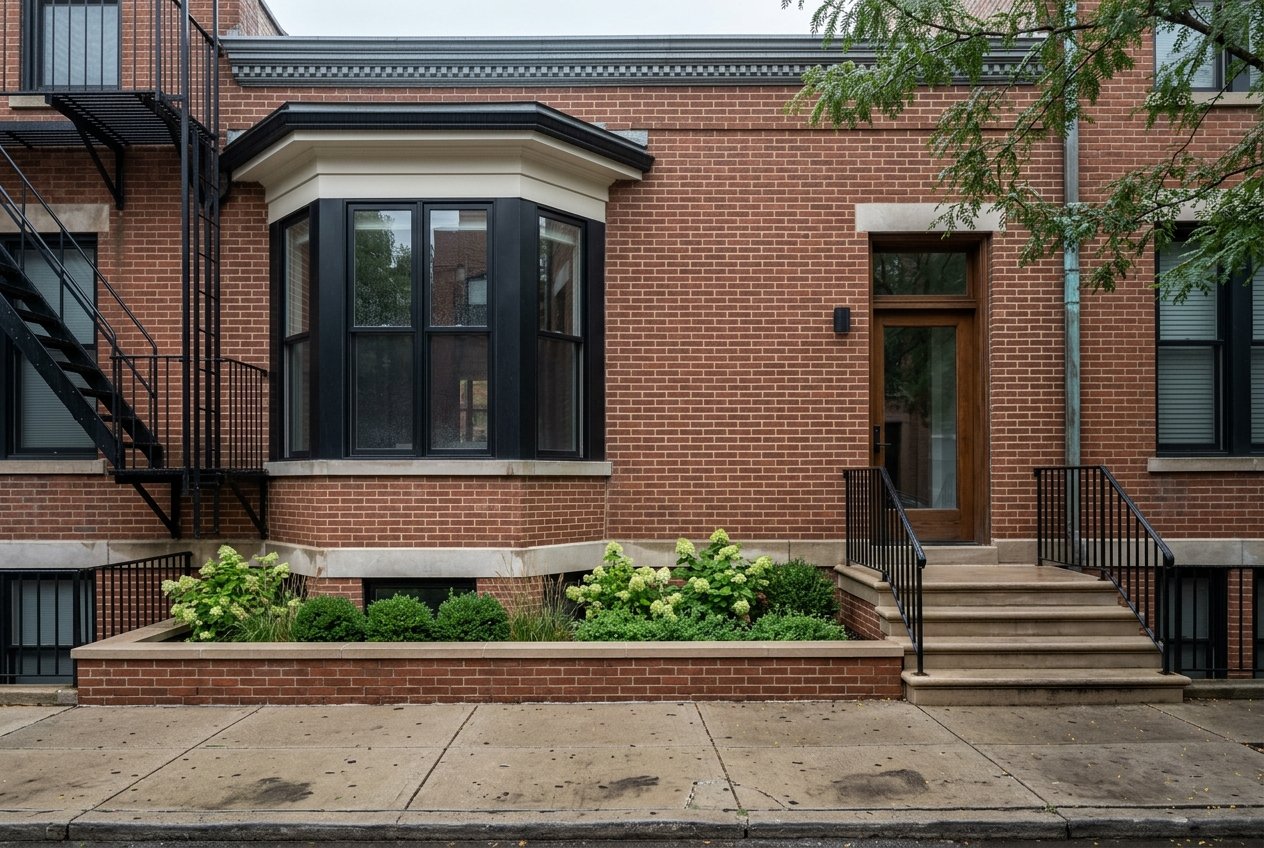
If you have ever looked at a West Town two-flat or three-flat and thought, this could be a great investment, you are not alone. The challenge is that West Town can look straightforward on the surface while hiding big differences in rents, expenses, and renovation costs from one pocket to the next. If you want to buy smarter, this guide will help you read the numbers with more confidence and build a deal analysis that actually reflects the market. Let’s dive in.
Why West Town needs careful underwriting
West Town is not one uniform submarket. According to the Chicago Public Library’s West Town community overview, the area includes Bucktown, East Humboldt Park, East Village, Noble Square, Pulaski Park, River West, Ukrainian Village, and Wicker Park.
That matters because a building a few blocks away can live in a very different pricing and rent environment. If you treat all of West Town as one average market, your underwriting can break fast.
The housing stock also makes West Town especially relevant for small multi-unit buyers. A CMAP housing profile for West Town shows that 44.2% of units are in 2- to 4-unit buildings, compared with 28.1% citywide.
That concentration gives you more chances to find classic Chicago investment product like vintage two-flats and three-flats. It also means many deals involve older buildings that need a sharper eye on deferred maintenance, utilities, and capital improvements.
Understand the local inventory first
West Town has a lot of older housing. The same CMAP housing profile reports a median year built of 1961, while 42.5% of units were built in 1939 or earlier.
For investors, that usually points to value-add opportunities rather than simple turnkey math. A vintage building may offer upside, but only if you budget realistically for the work it needs.
The market also shows consistent investor interest. CMAP reports that investor buyers made up 10.3% of residential sales in 2022, and recent one- to four-unit purchase loans had a median purchase price of $565,000 and a median loan amount of $475,000.
That is a good reminder that many buyers in West Town are already underwriting deals with leverage and operator-style assumptions. If you want to compete well, your numbers need to be disciplined.
Read rents by pocket, not by zip code
One of the biggest underwriting mistakes in West Town is using one broad rent number for every property. Rent levels change meaningfully across the area, and that can have a major effect on projected income.
The first thing to know is that different data sources may show different rent numbers for valid reasons. CMAP lists West Town’s median gross rent at $1,986, while current asking-rent sources often show higher figures because they reflect actively marketed units, newer finishes, and different methods.
That distinction matters. Occupied-household rent data tells you what people are currently paying across the stock, while asking rents show what renovated or currently marketed units may be trying to achieve.
West Town rent spread by sub-neighborhood
Current asking-rent data from RentCafe’s neighborhood rent pages shows a clear gradient across West Town pockets:
- East Village: $2,452
- Noble Square: $2,623
- Ukrainian Village: $2,694
- West Town: $2,695
- Wicker Park: $2,907
- River West: $2,998
If your building sits closer to East Village economics, underwriting it like a River West property can overstate your income from day one. The reverse is also true. A stronger pocket may support rents that a broad neighborhood average would miss.
Match rent comps to unit type
You also need to compare the right units. A renovated duplex with central HVAC and in-unit laundry should not be comped against a basic garden unit with older finishes.
When you pull rent comps, match as closely as possible on:
- Unit count in the building
- Bedroom and bathroom mix
- Renovation level
- Amenities and finishes
- Parking, laundry, and HVAC setup
- Exact sub-neighborhood location
The tighter your comp set, the better your projected rent roll will hold up under scrutiny.
Watch sale prices the same way
Sale values move by pocket too. According to Redfin’s West Town housing market data, West Town had a median sale price of $700,000 in February 2026 and was described as somewhat competitive, with homes selling about 1% above list and going pending in around 45 days.
But stronger pockets can trade above that. Redfin reports Wicker Park at $725,000 and Ukrainian Village at $893,000 for median sale price in February 2026.
That is why purchase price alone does not tell the full story. In premium pockets, buyers may pay up quickly for location and renovated condition, so the income side of the deal has to justify the basis.
Current multi-unit listings show the range
Public listing comps give a useful snapshot of what buyers are seeing right now. Redfin’s West Town multi-family search shows 27 listings with a median listing price of $950,000.
The same data set shows a wide spread in product and pricing. Examples in the report include:
- 2522 W Haddon Ave listed at $629,000, with one unit renting for $1,900 per month and the other for $1,700 per month
- 1730 W Beach Ave at $950,000
- 843 N Francisco Ave at $945,000
- 814 N Hermitage Ave at $1.7 million for a four-unit building with recent updates
Those examples are useful because they show how much pricing can move based on condition, size, and income potential. They also reinforce a key point: turnkey product commands a premium.
Listings on Redfin’s 60663 multi-family page include a fully renovated six-unit at 1437 W Superior St listed at $1.985 million and a turnkey five-unit at 1731 W Potomac Ave listed at $1.725 million. While those are not perfect 2- to 4-unit comps, they show how the market values stabilized, renovated income property.
Focus on the expenses that change the deal
In West Town, most underwriting problems do not come from forgetting a small repair line. They come from underestimating major expenses.
The CMAP West Town profile notes that owner costs include property taxes, insurance, utilities, mortgage, and HOA fees. For a small multi-unit building, that is a good reminder to build your expense stack line by line rather than relying on a generic percentage.
Property taxes need fresh attention
Property taxes deserve extra caution in Cook County. Axios Chicago reported that Cook County property tax charges increased 4% overall in 2024, and another Axios report in the research noted that Chicago property taxes have effectively doubled over the past decade.
If you use a stale tax figure from an older owner profile, your projected cash flow can look much better than reality. Before you get too attached to a deal, stress-test the taxes.
Insurance, utilities, and reserves add up
Older West Town buildings can also carry higher insurance and utility complexity than buyers expect. Vintage masonry, older systems, and multi-unit layouts can push real costs above a quick spreadsheet estimate.
That is why you should budget for:
- Property taxes
- Insurance
- Water and other utilities you may cover
- Repairs and maintenance
- Capital reserves for future systems work
A clean-looking building can still have meaningful hidden costs if the roof, windows, HVAC, plumbing, or electric work is aging.
Renovation budgets should be conservative
If your strategy depends on upgrading units and pushing rents, renovation budgeting has to be realistic. This is another place where West Town investors can get into trouble by assuming a cosmetic scope for a building that really needs deeper work.
A useful benchmark comes from the IHDA multifamily cost study materials, which show a median Chicago rehab cost of $103 per square foot in the 2023-value dataset. The same study materials note Chicago rehab costs were up 10.8%.
That does not replace contractor bids, but it is a strong warning against underwriting major value-add work at unrealistically low numbers. In many West Town buildings, $100-plus per square foot is a rough floor for meaningful rehab work, not an aggressive ceiling.
What upgrades tend to support rent growth
Based on current West Town-area multi-family listings, the market often rewards practical, rent-supporting improvements such as:
- In-unit laundry
- Central HVAC
- Updated kitchens and baths
- Newer windows
- Hardwood floors
- Parking
- Duplexed layouts
- Coach house or basement potential
Fresh paint may help presentation, but it usually does not create the same rent lift as functional upgrades that change how a unit lives.
Use a simple underwriting sequence
When you evaluate a West Town multi-unit property, it helps to follow the same sequence every time. That keeps your process grounded and makes it easier to compare one opportunity against another.
Step 1: Identify the exact pocket
Start with the micro-location. Is the building in East Village, Noble Square, River West, Ukrainian Village, Wicker Park, or another part of West Town?
This first step shapes both your rent comps and your resale assumptions. A few blocks can change the math in a big way.
Step 2: Pull current rent comps
Use current asking-rent comps that match the same unit type and finish level as closely as possible. Do not rely on a broad neighborhood average if your property has a very specific layout or condition profile.
If the building is unrenovated, avoid underwriting fully renovated rents unless you have a credible plan and budget to get there.
Step 3: Build real expense lines
Next, estimate taxes, insurance, utilities, maintenance, and reserves individually. This is where a lot of investors accidentally turn a marginal deal into a fake good deal.
If one expense line feels uncertain, use the more conservative assumption. A deal that still works after that is usually a healthier opportunity.
Step 4: Price the renovation honestly
Use contractor pricing, not wishful thinking. In older West Town stock, kitchens and baths are only part of the story.
You may also be dealing with mechanicals, windows, common areas, layout changes, or code-related improvements. Those items can quickly widen the gap between your first budget and your real budget.
Step 5: Test the stabilized return
After projecting stabilized income and subtracting realistic expenses, test the resulting NOI and cash-on-cash return. The research report notes that a common stabilized benchmark cited in multifamily education is about 5% to 8% cash-on-cash return annually.
In West Town, that range can be hard to hit without one of three things:
- Lower-cost owner-occupant financing
- Clearly below-market in-place rents
- A credible value-add renovation path
If the return only works because you assumed aggressive rent growth or a quick resale at better pricing, be honest about that. At that point, you are underwriting a yield-plus-appreciation story, not pure cash flow.
The bottom line on West Town deals
West Town can be a strong place to buy small multi-unit property, but it is not a market where loose math gets rewarded. The combination of older housing stock, meaningful rent differences by pocket, rising tax pressure, and expensive rehab work means your underwriting needs to be specific.
If you read the numbers carefully, you can spot the difference between a property with real upside and one that only looks good on a quick tour. That is often the edge in a neighborhood where buyers already understand the appeal and are willing to compete for the right building.
If you want help evaluating a West Town two-flat, three-flat, or four-unit opportunity, Spacematch Inc. can help you compare micro-market comps, pressure-test renovation assumptions, and build a smarter acquisition plan.
FAQs
How do you analyze a West Town multi-unit investment?
- Start by identifying the exact West Town pocket, then compare current rent comps, estimate taxes and insurance line by line, add realistic renovation costs, and test the stabilized return against your target.
Why do West Town rent numbers vary so much?
- West Town includes several distinct sub-neighborhoods, and asking rents in the research report range from about $2,452 in East Village to $2,998 in River West.
What is the difference between West Town gross rent and asking rent data?
- Gross rent data reflects what occupied households are paying, while asking-rent data reflects currently marketed units, which are often newer or renovated and usually priced higher.
What renovation costs should you expect for a Chicago multi-unit rehab?
- The research report cites an IHDA benchmark showing a median Chicago rehab cost of $103 per square foot, which is a useful rough baseline for meaningful value-add work before contractor bids.
Which upgrades matter most for West Town rental value?
- Current listings in the research report commonly highlight updated kitchens and baths, central HVAC, in-unit laundry, newer windows, hardwood floors, parking, and duplexed layouts.
Are West Town multi-unit properties mainly cash-flow investments?
- In many cases, West Town deals are better understood as yield-plus-appreciation plays, since entry prices can be high relative to rents unless the building has below-market leases, owner-occupant financing advantages, or a strong renovation path.
