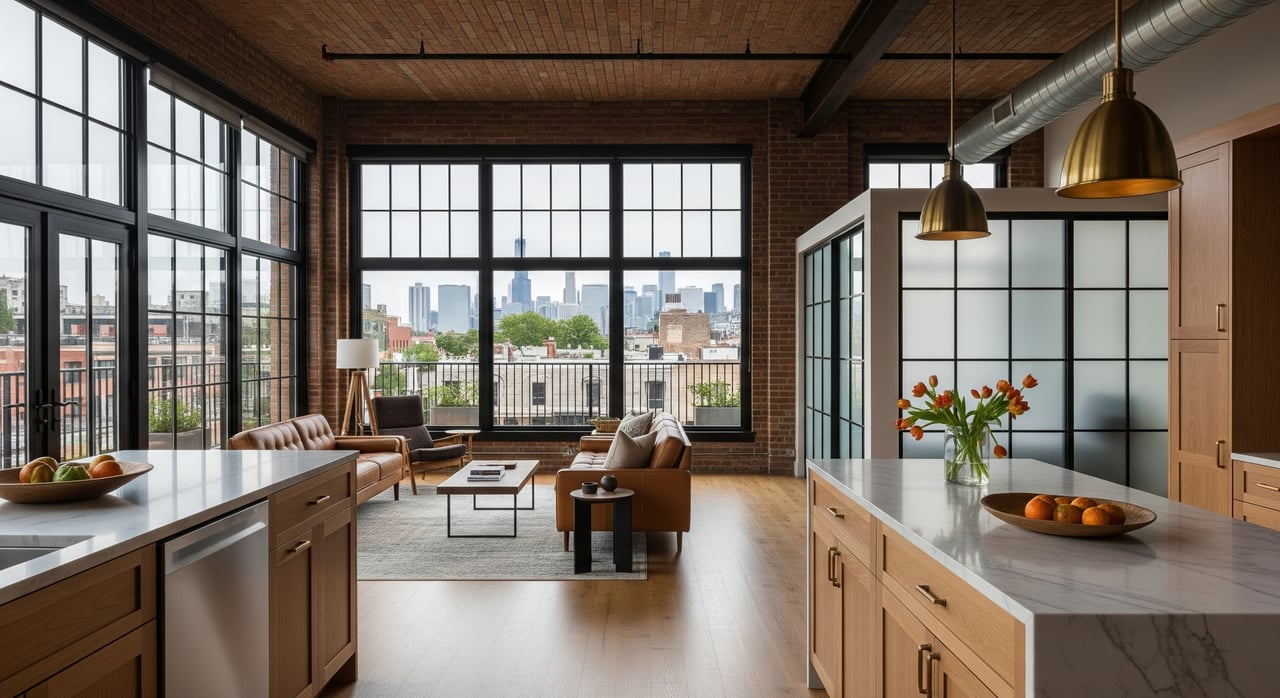
You love the character of a brick-and-timber loft, but a classic condo’s storage and quieter layout also appeal. In West Town, you can find both options on the same block, which makes the choice exciting and a little confusing. This guide breaks down how hard lofts, soft lofts, and traditional condos compare on light, noise, ceilings, storage, HOA rules, renovation flexibility, utilities, and parking. You’ll also get a buyer checklist tailored for West Town showings so you can move forward with confidence. Let’s dive in.
Loft vs. condo: what each means
Hard loft
A hard loft is a former industrial or commercial building converted to residential use. You typically see exposed brick, large factory-style windows, visible ductwork, and high ceilings that can reach 12 to 20 feet or more. Many hard lofts are sold as condominium units that are governed by an HOA, even though the style feels different from a typical condo.
Soft loft
A soft loft is newer construction designed to deliver the loft vibe. Expect higher ceilings than a standard condo, open plans, and sometimes exposed elements, but with modern windows and residential building systems from day one. The result is a contemporary look with better insulation and energy performance than many older conversions.
Traditional condo
A traditional condo offers more defined rooms and conventional layouts across studios to multi-bedroom homes. Storage is often better planned, and finishes vary by building and era. Ownership is clearly governed by a condominium declaration and HOA rules, similar to many loft buildings.
Important: “Loft” describes the look and layout. Ownership is often still a condominium with HOA rules under the Illinois Condominium Property Act. Always confirm the ownership structure.
How the choice changes daily life
Light
Hard lofts often deliver abundant daylight through large industrial windows and minimal interior walls. Window condition matters, since older single-pane steel frames can be drafty. Soft lofts typically use double-glazed windows for better comfort. Traditional condos range widely, from modest window sizes in older buildings to floor-to-ceiling glass in newer luxury options.
Noise
Open plans in hard lofts can let sound travel inside your unit. Thick masonry walls and heavy floors can help with street noise, but older windows may pass sound. Many soft lofts and condos include modern sound attenuation between units, though it varies by building. In West Town, check evening and weekend noise near restaurants, nightlife, and arterial streets.
Ceiling height and spatial feel
Hard lofts commonly have 12 to 20-plus foot ceilings that feel dramatic and airy. Soft lofts often land in the 9 to 12-foot range, which feels open without the energy demands of very tall spaces. Traditional condos typically provide 8 to 10 feet, with some newer or high-end buildings pushing higher.
Storage
Hard lofts may have fewer closets and less built-in storage. Structural features and exposed elements can make adding closets a little more complex. Soft lofts and traditional condos often include more thoughtful storage, in-unit laundry rooms, and assigned storage lockers. Ask about bike rooms, storage cages, or nearby self-storage if you need more space.
HOA rules and costs
If the property is a condominium, you are subject to the condo declaration, bylaws, and rules set by an elected board. Rules cover interior alterations, window and door replacements, balconies, pets, rental policies, and more. HOA dues vary based on what is included, such as heat, water, insurance, or building services. Review reserves, the budget, and special assessment history under the Illinois Condominium Property Act.
Renovation flexibility
Ownership and building rules drive what you can change, not the aesthetic. Even in a hard loft, structural changes, windows, plumbing, or HVAC work usually require HOA approval and city permits. If the building is landmarked or in a historic district, exterior changes like windows can be restricted by the City of Chicago. Ask what has been approved in the past and what documentation is required.
Utilities and maintenance
Older conversions may have less efficient systems or older windows, which can influence bills. Some loft buildings use boilers or original radiators, while many soft lofts and newer condos run on modern HVAC. HOA fees and what they include vary widely, from boutique buildings with modest fees to full-service mid- and high-rises with higher dues.
Insurance and liability
Plan to carry an HO-6 policy for your unit. The building’s master policy determines what you must cover inside your home. Ask about policy limits, deductibles, and whether finishes are covered or it is bare-walls coverage. Clarify who pays the master policy deductible in the event of a building claim.
Parking and transportation
West Town is urban and parking is limited around busy corridors. Some buildings offer assigned garage spaces or lots, while others rely on street parking. Ask about availability, waitlists, and costs for on-site parking. If you expect to go car-free, check transit access and car-share options near the building.
West Town factors to weigh
West Town blends historic masonry warehouses, boutique loft-style condos, and traditional condo buildings. That means you can prioritize character, convenience, or both. Proximity to restaurants, nightlife, and major streets is a lifestyle perk for some buyers and a source of noise for others. For any converted building, verify the residential Certificate of Occupancy and permit history through the City of Chicago. If a building is landmarked, know that exterior changes, especially windows, may be restricted.
Marketability can differ. Authentic hard lofts attract buyers who value character and can command premiums, though the buyer pool may be smaller. Soft lofts and traditional condos tend to appeal to broader groups, which can help with resale.
Quick comparison: which fits you?
- Choose a hard loft if you want dramatic ceilings, exposed brick, and oversized windows, and you can adapt to open plans and potentially less storage.
- Choose a soft loft if you want loft style with modern windows, better insulation, and a newer building systems profile.
- Choose a traditional condo if you prioritize defined rooms, built-in storage, and a wider range of layouts and amenities.
Your West Town due-diligence checklist
At showings and tours
- Check window type and operation. Note single-pane vs. double-glazed frames and any drafts.
- Test noise at different times: weekday daytime, evening, and weekend nights.
- Measure ceiling heights and consider how that affects HVAC comfort and furniture placement.
- Review closets, pantry, and laundry storage. Ask about storage lockers or bike rooms.
- Look for moisture stains, musty odors, or signs of past leaks.
- Test plumbing fixtures and water pressure. Ask about the age and type of water heater, boiler, or air handler.
- In older conversions, ask about past remediation for hazards typical of industrial buildings, such as asbestos or lead-based paint.
Documents to request
- Condo declaration, bylaws, rules, and any architectural guidelines.
- Current budget, recent financials, reserve study, and planned capital projects.
- Board meeting minutes for the last 6 to 12 months and any pending litigation.
- Master insurance summary and sample maintenance contracts, such as elevator servicing.
- Certificate of Occupancy and permit history for the conversion or major renovations.
- Recent utility bills or typical costs for similar units.
- Parking assignments, availability, and any rental or short-term rental policies.
Inspections and technical checks
- Full home inspection that covers structure, roof, plumbing, electrical, and HVAC.
- For conversions, consider environmental inspections for asbestos and lead-based paint, and confirm that any prior remediation was permitted and closed.
- Assess window and facade condition, especially older steel frames, for weather and sound performance.
- Confirm electrical service capacity for planned upgrades and whether past work meets code.
- Verify that past permits were issued and closed with the City of Chicago Department of Buildings.
Real-world tips for tours
- Take a noise walk. Stand by windows and near the bedroom with windows closed and open. Visit at peak evening hours.
- Ask how window replacements are handled. In a condo, you may need HOA approval, and historic or landmark rules can add steps.
- Map light over the day. Track morning versus afternoon sun based on unit orientation and any nearby buildings that could block light.
- Clarify what HOA dues include. Heat, water, insurance, and cable packages vary by building and change your monthly cost.
- Confirm short-term rental rules in the bylaws and minutes, not just the listing description.
Next steps
As you compare West Town lofts and condos, focus on the daily experience you want and the building rules that shape it. If you are planning upgrades, align your renovation plans with HOA approvals, code requirements, and realistic timelines. When you are ready to tour options and pressure-test the numbers, our team can help you model utility costs, review HOA health, and coordinate inspectors and contractors.
If you want a seasoned, tech-forward partner who knows West Town conversions and condo governance, connect with Spacematch Inc.. We Spacematch you to the right home.
FAQs
Are West Town lofts harder to resell than condos?
- Hard lofts can be very desirable for buyers who value character, but the buyer pool can be smaller. Soft lofts and traditional condos often appeal to broader groups, which can support resale.
Can I add a mezzanine or second level in a loft unit?
- Possibly, but you must confirm structural capacity, HOA rules, zoning, and obtain permits. Condominium boards often restrict structural alterations.
Do most HOAs in West Town allow short-term rentals?
- Policies vary widely by building, and many associations restrict or prohibit short-term rentals. Always verify bylaws and recent board minutes.
Will tall ceilings increase my utility bills in a loft?
- Usually yes, since more air volume requires more heating and cooling. Efficient windows and modern HVAC can help offset the load.
Can I replace historical windows in a converted building?
- Exterior window changes in landmarked or historic buildings may require approval from the City of Chicago’s landmarks authority, and HOAs may have appearance rules even in non-landmarked buildings.
