Thinking about trading your North Side condo for a Skokie home with a yard? You are not alone. Many Chicagoans consider Skokie for more space, a different tax picture, and a new commute pattern, but it is hard to tell what truly changes until you compare facts side by side. In this guide, you will get clear, data-backed differences in housing, taxes, transit, and day-to-day life so you can make a confident decision. Let’s dive in.
The big picture: what shifts
Housing mix and space
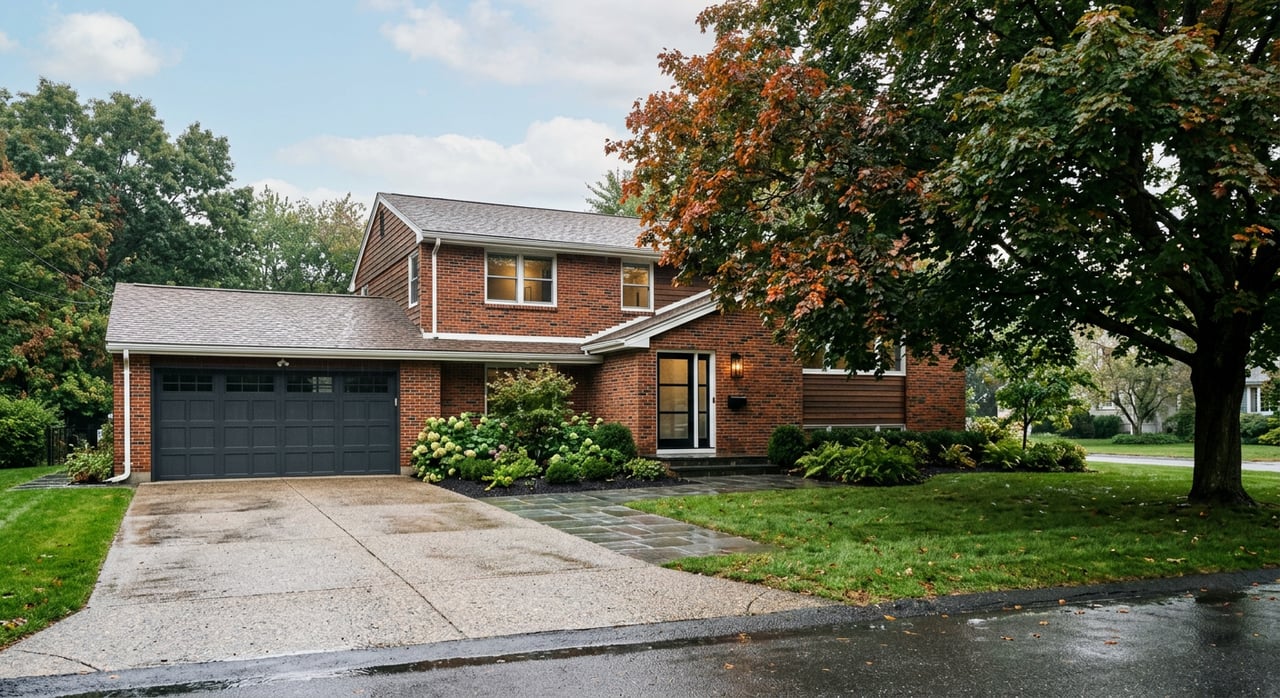
You will notice more single-family homes and driveways as soon as you start touring in Skokie. The owner-occupied rate is about 74 percent in Skokie versus roughly 46 percent in Chicago, which signals a higher share of single-family inventory and a lower-density feel overall. That shift often translates into more indoor square footage and a yard at similar price points, depending on the street and property type. If you are moving from a condo, you should also plan for new responsibilities like lawn care and driveway snow removal.
According to U.S. Census QuickFacts, Skokie’s household profile also skews a bit higher income, which can show up in the types of homes on the market and renovation levels you see during showings. Use recent, address-level comparables to see how the space, parking, and lot size stack up for your exact budget.
Price and rent baseline
Census data on owner-occupied homes shows the median value around $369,000 in Skokie versus about $334,000 in Chicago. Median gross rent sits in a similar band on both sides of the city line, roughly $1,491 in Skokie and $1,440 in Chicago. These figures are multi-year averages, so your real-time search may read higher or lower based on current listings, condition, and location. If you are deciding between a 2-bed condo in Edgewater and a 3-bed ranch in Skokie, you will want to look beyond medians and compare lot size, parking, and renovation level to understand total value.
- Reference: U.S. Census QuickFacts for Skokie housing and income baselines. See commute, population, and income here and home value and rent here: Skokie QuickFacts snapshot 1 and Skokie QuickFacts snapshot 2.
Property taxes and your total cost
What drives the bill
Do not assume a move to the suburbs automatically lowers your property taxes. In Illinois and Cook County, effective property-tax burdens are among the highest in the country according to policy research, and your bill is driven by assessed value plus the levies set by overlapping taxing bodies. In Skokie, the Village’s own share of a typical bill is relatively small, roughly 5 to 6 percent. The majority goes to school districts, with elementary schools around 42 percent and high schools about 30 percent of an average bill.
The Village has published an approximate average residential bill in the seven-thousand-dollar range, about 7,100 to 7,200 dollars. That is a helpful benchmark, but street-level bills vary widely by property value and exact district boundaries. The practical takeaway is simple. Two similar homes in different school districts can have very different annual taxes.
- For distribution and averages, review the Village’s overview of tax components in the Skokie Tax Guide. For statewide context on Illinois property-tax pressure, see this analysis from the Civic Federation.
How to check a property’s tax bill
Before you write an offer, verify the current bill for the exact address.
- Look up the parcel in Cook County Treasurer and Assessor tools to confirm the most recent full-year bill and assessed value.
- Note which elementary and high school districts serve the property, since school levies drive most of the total.
- Ask your agent to model a tax scenario if the property’s assessed value changes after a sale.
The Village’s FAQs also explain which municipal fees are steady and which line items tend to move year to year. You can review that context in the Skokie municipal FAQ.
Commutes and transit reality
CTA and Pace overview
Skokie’s primary rapid-rail connection is the CTA Yellow Line, known locally as the Skokie Swift. It runs between Dempster-Skokie and Howard, where you transfer to the Red or Purple Line to reach the Loop or the North Shore. Several Pace routes also serve the Dempster corridor and connect to nearby points. Skokie does not have a Metra station inside the village limits, so most riders rely on Yellow Line transfers or bus connections.
- For routing and schedules, start with the CTA Yellow Line page.
How long will it take to get downtown
On paper, Skokie residents report a slightly shorter average commute than Chicago residents overall. The mean travel time for Skokie is about 27.9 minutes compared with roughly 33.1 minutes for the City of Chicago. That is a population average across all modes and destinations, so your specific commute can be shorter or longer.
A typical rail trip from Dempster-Skokie to the Loop often falls in the 30 to 50 minute door-to-door range once you account for the short Yellow Line leg to Howard, transfer time, and the Red Line ride to downtown. If you drive, off-peak trips can be in the mid-20s while peak-hour traffic can stretch past 50 minutes depending on your route and final destination.
- For commute and income baselines, see U.S. Census QuickFacts.
How to test your commute before you move
Do a real-time check so there are no surprises.
- Run your current address and each Skokie candidate property to your office in Google or Apple Maps at both AM and PM peak times.
- Use the CTA trip planner to test Yellow Line plus Red or Purple options, then note walking times from each property to the stop.
- If you split days between downtown and a suburban hub like O’Hare or the North Shore, test those trips too. Many Skokie residents find suburban commutes shorten while Loop trips require a transfer.
Lifestyle, parks, and local services
Parks and recreation
Skokie Park District manages a wide range of parks, programs, pools, and community centers across the village. You will find neighborhood green space plus access to nearby forest preserves and lagoon systems in northern Cook County for larger outdoor runs, rides, or quiet time. For a sense of facilities and programming, browse the Skokie Park District guide.
Schools, districts, and budgets
School district boundaries are different in Skokie than on the North Side, and those boundaries can play a major role in your long-term costs because school levies make up most of a typical bill. If schools are part of your decision, review the specific district assignments for each address and consult the latest Illinois State Board of Education report cards for performance data. Keep your language neutral when you compare. The right fit depends on your priorities.
Will you get more home for your money
Often yes, but be specific. Many Chicago-to-Skokie movers trade a condo for a single-family home with a yard and off-street parking. Others move laterally to a Skokie condo for a different commute or amenities. The key is matching housing type, condition, lot size, and parking across both locations, then factoring in taxes, HOA fees if any, and likely renovation plans. A careful apple-to-apple comparison will tell you more than any headline median.
A simple side-by-side checklist
Use this to evaluate a Chicago listing versus a Skokie home in the same budget.
- Space and parking: Compare interior square footage, basement usability, garage or driveway, and outdoor area.
- Condition and upgrades: Note age of roof, windows, mechanicals, and level of recent renovation.
- Property taxes: Pull the latest full-year bill and confirm which districts levy taxes at the address.
- Commute: Test AM and PM trips by both rail and car, then write down door-to-door times from the property’s front door.
- Noise and density: Walk the block at different times, paying attention to traffic, commercial activity, and lighting.
- Parks and services: Identify your nearest park, pool, and community center, then check municipal FAQs for fees and services.
How Spacematch helps you compare
You deserve more than guesswork. As a Chicago-based team that also works select suburbs, we combine neighborhood knowledge with operator-level execution to help you move with clarity. Here is how we can support your Chicago to Skokie decision.
- Real comps, not averages: We pull address-level comparables for both locations in your exact price band, including square footage, lot size, and condition.
- Commute modeling: We run address-to-address trip tests and share realistic rail and driving ranges so you know what to expect.
- Tax diligence: We help you gather current bills, confirm district lines, and model how assessments could shift after purchase.
- Renovation and staging plans: If a Skokie house needs updates, our in-house contractor network and staging resources streamline rehab-to-resale thinking or move-in improvements.
- Creative solutions: If you are also selling in the city, we align timing, financing options, and digital-first marketing to reduce friction and keep your move on schedule.
Ready to explore listings, line up tours, and compare options side by side? Connect with Spacematch Inc.. We Spacematch you to the right home.
FAQs
Will my commute be longer if I move from Chicago to Skokie?
- Skokie’s mean commute is about 27.9 minutes versus Chicago’s 33.1 minutes on average, but your actual time depends on your origin, destination, and mode, so test routes before deciding.
Are property taxes lower in Skokie than in Chicago?
- Not automatically, since Illinois and Cook County have high effective property-tax burdens and Skokie’s bill is driven mostly by school district levies and assessed value at your address.
What transit options connect Skokie to downtown Chicago?
- The CTA Yellow Line links Dempster-Skokie to Howard for Red or Purple transfers, and Pace buses serve the Dempster corridor, which together provide reliable access to the North Side and the Loop.
Do I get more space for the same budget in Skokie?
- Often yes, because Skokie’s housing stock skews more single-family with yards and driveways, though exact results depend on the property, street, and renovation level you choose.
How do rents in Skokie compare to Chicago rents?
- Census estimates show median gross rent in a similar band in both places, roughly $1,491 in Skokie and $1,440 in Chicago, with real-time rents varying by unit type and condition.
How are Skokie property taxes distributed across local services?
- The Village’s share is about 5 to 6 percent of a typical bill, while most of the total goes to elementary and high school districts, so district boundaries matter for long-term costs.
