Looking for a place that feels tucked away without feeling disconnected? Long Grove stands out because it pairs a preserved historic village center with the kind of extra land and breathing room that is harder to find across much of Chicagoland. If you want a clearer picture of what daily life, housing, and lifestyle really look like here, this guide will walk you through the essentials. Let’s dive in.
Why Long Grove Feels Different
Long Grove is a village in southern Lake County, about 35 miles northwest of Chicago, with access near Routes 83, Old Route 53, Lake Cook Road, I-94, and Route 53. That location gives you regional connectivity while still supporting a quieter pace than denser suburban or city environments.
What makes Long Grove especially distinct is the way its identity has been preserved. The official downtown and village materials describe it as Illinois’ first historic district, with a setting shaped by local shops, restaurants, green space, entertainment, and its well-known single-lane covered bridge.
This is also a relatively small and stable community. Current Census data shows a population of 8,343, with 2,699 households and a 95.7% rate of residents living in the same home one year ago, which points to a place where many people stay put.
Historic Village Charm in Daily Life
If you are drawn to places with character, Long Grove’s village core is a big part of the appeal. The downtown area is described by the village as compact, cobblestone-lined, and designed for strolling rather than rushing from one errand to the next.
The local business mix supports that experience. Village sources highlight gift boutiques, home decor stores, art galleries, candy shops, and specialty retail, along with coffee shops, tea rooms, pizzerias, breweries, wine bars, taverns, and established local restaurants.
That means your day-to-day experience can feel more personal and place-based. Instead of a purely residential suburb with little center of gravity, Long Grove has a defined core that gives the community texture throughout the year.
Festivals Add Year-Round Energy
Long Grove is not just quiet and residential. Its festival calendar runs from April through December and includes events such as Craft Beer Fest, Chocolate Fest, Strawberry Fest, Vintage Days, Irish Days, Apple Fest, October Days, and the Vintage Holiday Season.
For you as a buyer, that matters because it shows the village center is active and seasonal. The area functions as both a hometown destination and a draw for visitors, which adds energy without changing the overall low-density feel of the residential areas.
Extra Space Is Part of the Plan
The phrase “extra space” is not just marketing language in Long Grove. It is built into the village’s land-use pattern and zoning rules.
The zoning code calls for large minimum lot sizes in key residential districts. R1 requires 3-acre minimum lots, R2 generally requires 2-acre lots, and R3 requires 1-acre lots, along with substantial setbacks and height limits.
Those standards help explain why Long Grove feels more spread out than many nearby communities. With the village covering 12.39 square miles and averaging about 675 people per square mile, the overall layout supports privacy, lower density, and a more open streetscape.
What Large Lots Mean for You
Larger lots can shape your experience in practical ways. You may notice more separation between homes, more visible green space, and a stronger sense of quiet compared with tighter subdivision patterns.
The village’s comprehensive plan reinforces that this is intentional. It states that Long Grove’s rural and countryside character remains largely intact and that preserving open space depends on maintaining large lots and limits on house size.
The same planning materials note that in-law suites and coach houses are allowed on Long Grove’s large lots. For some buyers, that flexibility may be appealing when thinking about long-term living arrangements or how a property could support changing needs over time.
Housing Style and Residential Character
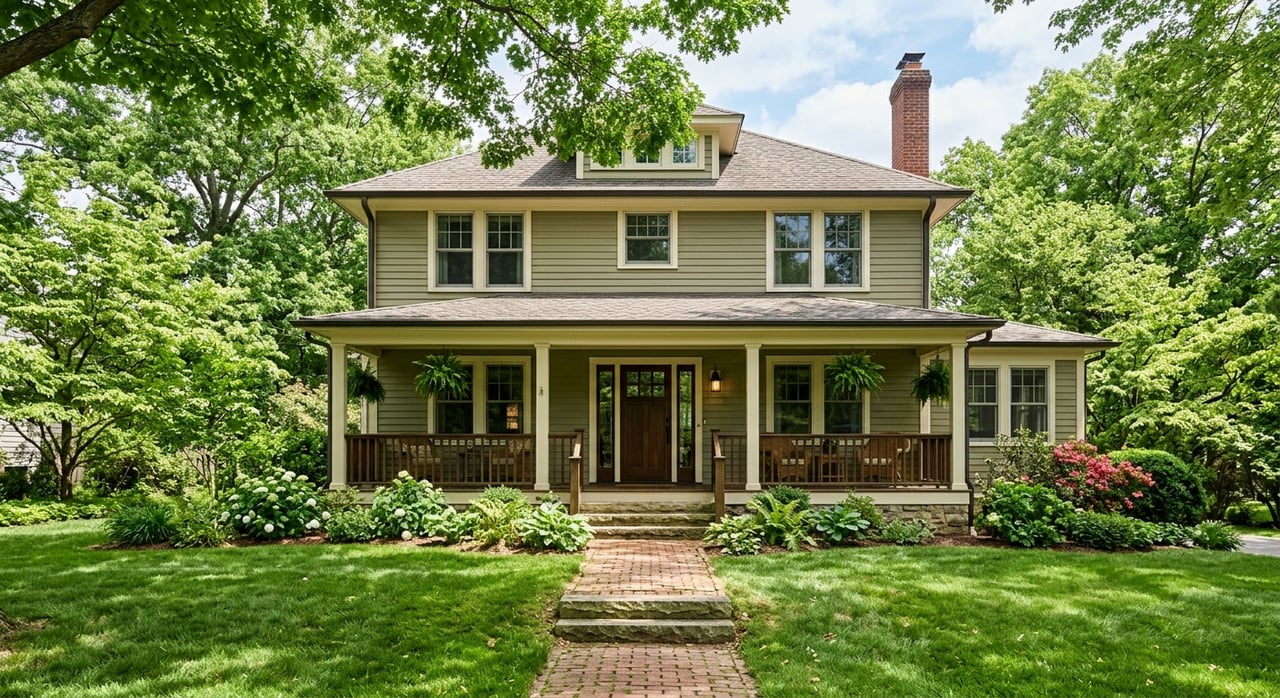
Long Grove’s housing story is closely tied to detached single-family living. Based on the village’s acreage requirements, open-space goals, and low-density planning approach, the community is primarily defined by larger residential parcels rather than townhome-heavy development.
That does not mean every home is the same. It does mean the village’s framework is built around scale, spacing, and preserving a certain countryside feel.
The comprehensive plan also notes that attached or zero lot line housing is mainly contemplated near commercial clusters. For most buyers exploring Long Grove, the dominant experience is likely to be low-density residential living with more land than you would expect in many suburban markets.
A Market Shaped by Ownership and Stability
Census figures add another layer to the picture. Long Grove has a 96.3% owner-occupied housing rate, a median owner-occupied home value of $804,600, and a median household income above $250,000.
Taken together, those numbers suggest a market that skews toward established homeowners and longer-term ownership. If you are searching for a community where people often stay, maintain their homes, and invest in the long view, Long Grove fits that profile.
Open Space Is a Daily Amenity
One of the strongest lifestyle advantages in Long Grove is how closely housing and open land are connected. The village’s conservancy materials emphasize abundant open space, wildlife, and diverse natural ecosystems, and they note that many residential subdivisions include conservancy easements.
The village also highlights tree preservation as part of protecting its natural and rural atmosphere. That focus matters because it helps preserve the visual character that many buyers are looking for when they choose a place like Long Grove.
Beyond subdivision design, nearby recreation supports that green setting. Lake County Forest Preserves identifies Buffalo Creek and Heron Creek in the Long Grove area, and the village profile references Reed-Turner Woodland Nature Preserve as part of the local park district landscape.
Why This Appeals to Move-Up Buyers
If you are comparing suburban options, Long Grove may stand out when your priority is room to spread out without giving up a sense of place. You get a village core with shops, dining, and seasonal events, but your residential environment is still shaped by acreage, conservancy, and lower density.
That balance can be hard to find. Some communities offer activity but little privacy, while others offer land but not much of a central gathering place. Long Grove gives you both in a way that feels deliberate.
Commuting and Connectivity
Long Grove’s slower rhythm does not mean you are cut off from the broader region. Its location near major roads helps connect residents to the wider Chicagoland area.
At the same time, Census data shows an average commute of 33.5 minutes. That supports the idea that access exists here, but it does not erase the village’s quieter identity.
For many buyers, that tradeoff is the point. You can stay plugged into work, regional amenities, and the broader market while coming home to a setting that feels more spacious and less congested.
Who Long Grove May Fit Best
Long Grove tends to make the most sense if you value privacy, larger lots, and a preserved village center. It can be especially appealing if you are looking for a move-up home, planning for long-term ownership, or prioritizing space and setting over a dense, highly walkable street grid.
It may also appeal to buyers who want more flexibility in how a property supports their lifestyle over time. Between the large-lot pattern, low-density residential design, and the possibility of accessory living arrangements on qualifying properties, Long Grove offers a different kind of suburban experience than many more compact alternatives.
What to Watch When You Search
If Long Grove is on your list, it helps to evaluate homes through the lens of the village’s planning and lifestyle pattern. Pay close attention to:
- Lot size and how it affects privacy and usable outdoor space
- Location relative to the historic village core
- Conservancy easements or natural features on or near the property
- Road access and how the home connects to your regular commute
- Long-term fit if you want flexible living space or multigenerational options
In a market like this, the right match is often about more than square footage alone. The setting, parcel, and relationship to open space can be just as important as the house itself.
If you are exploring Long Grove as a buyer or considering how to position a home for sale in this kind of lifestyle-driven market, working with a team that understands both presentation and property fit can make the process smoother. Spacematch Inc. helps clients navigate Chicagoland homes with a practical, high-touch approach built around strategy, service, and the right match.
FAQs
What is Long Grove known for in Lake County?
- Long Grove is known for its historic village center, cobblestone-lined downtown, local shops and restaurants, seasonal festivals, open space, and its single-lane covered bridge.
What kind of homes are common in Long Grove?
- Long Grove is primarily associated with detached single-family homes on larger lots, supported by zoning districts with 1-acre, 2-acre, and 3-acre minimum lot sizes.
Does Long Grove feel more spacious than other suburbs?
- Yes. The village’s low-density planning, large minimum lot requirements, and emphasis on open space help create a more spread-out and private residential feel.
Is Long Grove a good fit if you want both charm and privacy?
- Long Grove can be a strong fit if you want a preserved historic downtown experience along with larger residential parcels, more separation between homes, and a quieter overall pace.
Are there outdoor spaces near Long Grove homes?
- Yes. Village materials highlight conservancy easements and tree preservation, and the area includes access to places such as Buffalo Creek, Heron Creek, and Reed-Turner Woodland Nature Preserve.
What does the Long Grove housing market feel like?
- Based on Census data, Long Grove appears to be a stable, owner-heavy market with high owner occupancy, a high median home value, and many residents staying in the same home year over year.
