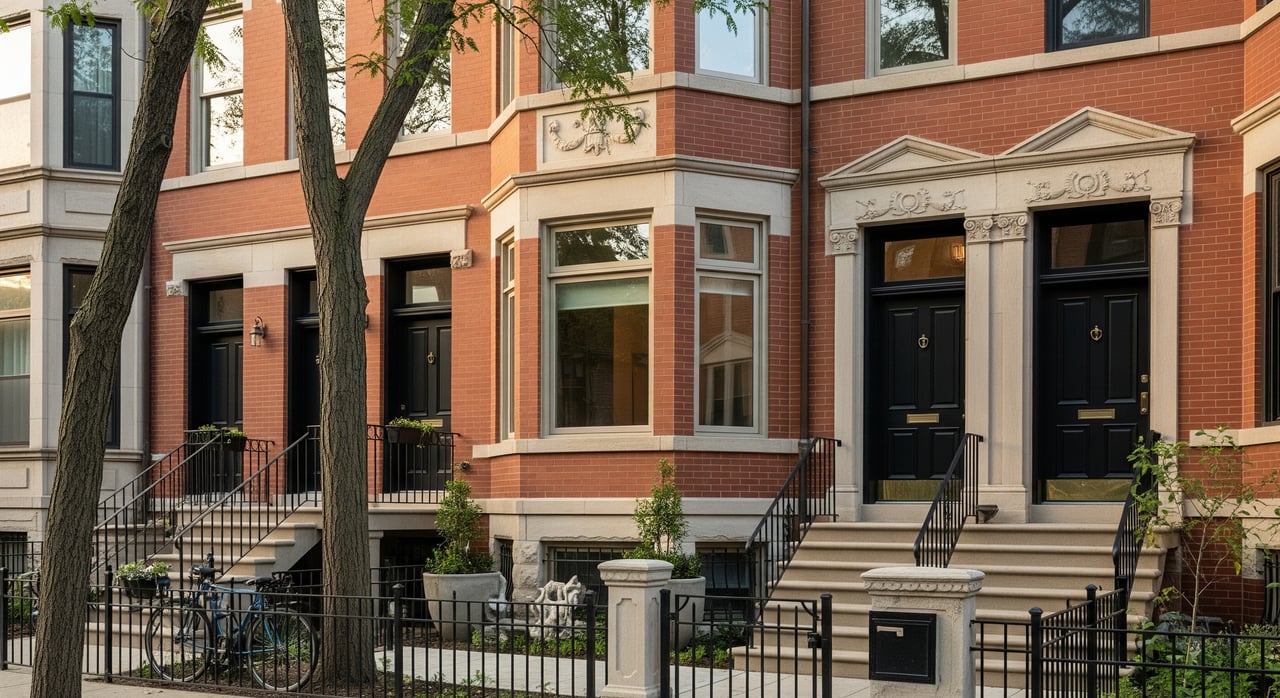
What if your first home helped pay your mortgage? In West Town, that can be your reality when you buy a 2–4 unit building, live in one unit, and rent the others. If you are a first‑time buyer or early investor, house hacking can lower your monthly cost and help you qualify for more. In this guide, you’ll learn the financing paths, how lenders count rent, simple pro‑forma examples, and the Chicago rules you need to know. Let’s dive in.
What house hacking looks like in West Town
West Town has a deep inventory of small multi‑unit buildings: two‑flats, three‑flats, greystones, small frame and brick walk‑ups, plus some mixed‑use near commercial corridors. These properties often have separate kitchens and baths, which makes them rental‑ready. You live in one unit as your primary home and lease the others to offset your costs.
The appeal is simple. You enter the market as an owner‑occupant, use widely available loan programs for 1–4 unit properties, and let rental income reduce your net payment. With older buildings common in West Town, plan for maintenance and capital repairs as part of your strategy.
Financing options for 2–4 units
FHA 1–4 unit loans
Many first‑time buyers start with the FHA 203(b) program because of its low down payment for qualified borrowers. The program is designed for owner‑occupied 1–4 unit homes, and you must plan to move in, generally within 60 days of closing. Learn more at the U.S. Department of Housing and Urban Development’s overview of FHA programs on hud.gov.
- Typical minimum down payment: 3.5% for creditworthy borrowers
- Owner‑occupancy required
- Lenders often allow a portion of rental income from the other units for qualifying
VA loans (for eligible buyers)
If you’re eligible for a VA loan, you can use it to purchase and occupy a 1–4 unit property. VA loans often require no down payment, subject to entitlement and occupancy rules. Speak with a lender about your eligibility and how they will treat subject property rent in underwriting.
Conventional loans (Fannie Mae and Freddie Mac)
You can also buy an owner‑occupied 2–4 unit with a conventional loan. Down payment and reserve requirements are typically higher than for a single‑unit primary home, and each lender’s pricing and overlays vary. For official guidance, review the Fannie Mae Selling Guide and Freddie Mac Single‑Family resources with your lender.
- Down payment minimums depend on lender and product
- Expect stronger cash reserve requirements for multi‑unit
- Subject property rent can be counted with specific documentation
State and local programs
Down payment assistance and specialized financing may be available through the Illinois Housing Development Authority. Local banks and credit unions sometimes offer portfolio products, rehab loans, or flexible treatment of rental income. Always confirm current terms with the lender.
How lenders use rental income
The 75 percent rule
A common lender practice is to count 75% of the gross rent from the non‑owner units for qualifying. That 25% haircut is a conservative allowance for vacancy and operating costs. With FHA and many conventional loans, lenders will use either current leases or the appraiser’s market rent schedule when units are vacant, subject to each program’s documentation rules.
Key idea: Some lenders add rental income to your qualifying income, while others offset your housing payment with the rental credit. Model both approaches and get your lender’s method in writing.
Documents you will likely need
- Executed leases for rented units and tenant contact info
- Rent roll or ledger from the seller for existing tenants
- Appraiser’s rent schedule or market rent comps for vacant units
- Your tax returns if you have prior rental history
- Proof of owner‑occupancy intent after closing
Run the numbers: simple examples
The numbers below are illustrative and for learning only. Always confirm rates, payments, and rent treatment with your lender, and use conservative assumptions.
Example A: Two‑unit with FHA
- Purchase price: $650,000
- Down payment: 3.5% FHA, about $22,750 plus closing costs
- Units: You live in Unit A (market rent if rented: $2,400); Unit B rents for $2,000
- Lender qualifying rent: 75% of $4,400 gross = $3,300
- Estimated P&I at an illustrative 30‑year payment: $2,800 per month (rate dependent)
- Taxes and insurance for DTI: $800 per month
- Total housing cost for DTI: $3,600
- Rental credit in qualifying: $3,300
Cash flow snapshot if you collect rent only from Unit B:
- Gross rent: $2,000
- Operating expenses at 30%: $600
- Net toward mortgage: about $1,400
You also enjoy the housing value of your owner unit, which is why house hacking can dramatically lower your net cost.
Example B: Three‑unit with conventional
- Purchase price: $900,000
- Down payment: 15% conventional, about $135,000
- Units: You live in one; two rentals at $2,000 and $2,200
- Lender qualifying rent: 75% of $4,200 = $3,150
- Typical operating expense ratio for older, owner‑managed buildings: about 40% of gross rent
- After vacancy and reserves, qualifying improves because lenders count subject rental income, but cash flow still depends on expenses and financing
Tip: Model vacancy at 5–10%, set aside capital reserves of $250–$500 per unit annually, and stress test for rate changes and big repairs.
West Town rules and compliance checklist
Zoning, conversions, and ADUs
Chicago zoning can be complex. If you plan to alter a building or add a unit, consult the City of Chicago’s zoning and permitting resources. Start with the City’s main portal and the Departments of Planning and Buildings so you understand use and permit requirements. You can review current guidance on chicago.gov.
Action step: Verify the legal unit count and permitted use before you write an offer.
Rental registration and RLTO
Chicago requires rental registration and enforces the Residential Landlord and Tenant Ordinance for leases, security deposits, disclosures, and habitability standards. Review official RLTO information on chicago.gov and confirm any inspection or licensing steps that apply to your property type. Non‑compliance can lead to fines or blocked rentals.
Property taxes and exemptions
Cook County property taxes are a major line item. As an owner‑occupant, you may qualify for a homeowner exemption for the unit you occupy. Use the Cook County Assessor’s tools to estimate taxes and review exemption rules at the Cook County Assessor, and track bills via the Cook County Treasurer.
Rent control and short‑term rentals
Chicago does not have citywide rent control. Short‑term rentals are regulated and often restricted, and local licensing rules apply. If you plan to explore furnished or short‑term strategies, review current City guidance before relying on that income.
Older buildings: safety and lead
Many West Town buildings are older and may contain lead‑based paint. For rentals, you must meet federal and local disclosure requirements and use lead‑safe work practices during renovations. Budget for typical big‑ticket items in older masonry buildings, like tuckpointing, roof work, boilers, and electrical upgrades.
Pre‑offer due diligence checklist
Use this quick list before you submit an offer on a 2–4 unit house hack:
- Confirm the legal number of units and permitted use
- Collect leases, rent ledger, and tenant contacts
- Verify your loan’s owner‑occupancy timeline and requirements
- Order a full home inspection and pest inspection
- Prioritize mechanicals, roof, boiler/furnace, electrical, foundation
- Request rental history, utility splits, and recent capital expenses
- Run rent comps for the immediate area and review the appraiser’s rent schedule
- Check for open permits, municipal violations, and required registrations
- Build a conservative pro‑forma using 75% rental credit for qualifying, 30–50% operating expenses, and 5–10% vacancy
Your action roadmap
- Step 1: Preliminary research. Identify 2–4 unit listings in West Town and speak with a lender who regularly underwrites owner‑occupied multi‑units.
- Step 2: Financial modeling. Use conservative rents, a 40% expense scenario for older buildings, and set aside capital reserves.
- Step 3: Property due diligence. Verify zoning, order inspections, review leases, and check city records for violations.
- Step 4: Offer and financing. Secure a pre‑approval that states how subject property rents will be treated, and include inspection and financing contingencies.
- Step 5: Closing and occupancy. Complete required rental registration, apply for the homeowner exemption if eligible, move in within your loan’s required timeline, and launch your leasing plan.
Risks and how to avoid them
- Over‑estimating rents. Use comps from within West Town and build in a vacancy buffer.
- Under‑budgeting repairs. Older buildings often need masonry, roof, mechanical, or electrical work. Hold reserves.
- Regulatory missteps. Unpermitted conversions or missing registrations can block rentals and cause fines.
- Lender mismatches. Different lenders treat subject rents and reserves differently. Get written confirmation of their method.
How Spacematch helps you house hack
You want a partner who knows West Town’s building stock and the lending details that make house hacking work. Spacematch pairs a high‑touch buying experience with operator‑grade execution. You get help sourcing 2–4 unit opportunities, conservative underwriting support, and coordination with lenders who understand subject‑rent qualifying. If you plan value‑add improvements, our in‑house staging, contractor network, and rehab experience help you prioritize the right upgrades and timeline.
When you are ready to run the numbers on a specific building, we will help you pressure‑test rents, estimate expenses, and map the permit and inspection steps so you can move from offer to occupancy with confidence. If you need to explore FHA, conventional, or down payment assistance, we will connect you with lenders who regularly finance owner‑occupied multi‑units and can document how they will count the income.
Ready to start your West Town house hack? We Spacematch you to the right home. Connect with Spacematch Inc. to plan your path.
FAQs
What is house hacking for 2–4 units in Chicago?
- You buy a small multi‑unit, live in one unit, and rent the others to lower your net housing cost and help with loan qualifying.
How do lenders count rental income from the other units?
- A common practice is to use 75% of gross rent from non‑owner units for qualifying, based on leases or appraiser market rent, with documentation per loan program.
What down payment do I need for FHA or conventional?
- FHA often allows 3.5% down for qualified borrowers on 1–4 unit owner‑occupied purchases, while conventional down payments and reserves are typically higher and vary by lender.
How soon must I move in after closing with FHA?
- FHA generally requires you to occupy the property as your primary residence within about 60 days; confirm timing with your lender and review FHA guidance on hud.gov.
Where can I find official rules for conventional underwriting?
- Review the Fannie Mae Selling Guide and Freddie Mac Single‑Family resources with your lender to understand documentation and income treatment.
Do I need to register my rental in Chicago?
- Yes. Chicago enforces rental registration and the RLTO for landlord‑tenant rules. Start with the City’s official information on chicago.gov.
Can I get a homeowner exemption on a multi‑unit I occupy?
- Owner‑occupants may be eligible for a homeowner exemption. Confirm eligibility and estimate taxes using the Cook County Assessor and track bills via the Cook County Treasurer.
