For fifty-one years, Wells Street in Old Town had exactly one weekend that stopped traffic, filled every restaurant patio, and turned the strip between North Avenue and Division Street into an open-air gallery. That was the Wells Street Art Festival, and it was enough. One marquee weekend a year, more artists than you could see in a single pass, and a reputation that carried the neighborhood's cultural identity the rest of the year.
That math changed in 2025. Old Town Oktoberfest showed up as a scrappy, $5-suggested-donation debut, and instead of fading after one run, it came back in September 2026 bigger, with its own street closure, its own merchant kickoff party, and its own place on the calendar. Wells Street now runs on two signature weekends instead of one, roughly three months apart, and the second one didn't need to prove itself twice.
One Festival Used To Be Enough
The Wells Street Art Festival isn't a new idea dressed up as tradition. Its 2026 edition was the 51st, and it drew more than 125 artists and crowds reported in the tens of thousands to the stretch of Wells between North Avenue and Division Street in June. Featured artist Hiroshi Ariyama, known for screen prints of Chicagoland scenes, anchored this year's run, and the event still leans on longtime participants, including artist Candace Marsella, who has shown work at the festival for over a decade.
Marcy Huttas, executive director of the Old Town Merchants & Residents Association, described the appeal in a way that gets at why the festival has lasted this long: "It's really fun to engage with the artists also and to find out about their process." That's a festival built on relationships that repeat year over year, not a one-time booking. It's the kind of event a neighborhood can hang an entire cultural identity on, which is exactly what Old Town did for five decades.
Then Oktoberfest Showed Up, And Didn't Leave
A single legacy festival is a stable equilibrium. Adding a second one that sticks is a different story, and that's what happened here. Old Town Oktoberfest debuted in September 2025 on the 1300 block of North Wells, between Schiller and Evergreen streets, directly across from Cobbler Square Lofts. It was modest by design: a suggested $5 gate donation, bratwurst and pretzels from a dedicated festival menu, and Masskrugstemmen stein-holding contests as the signature bit of spectacle.
The 2026 return, running September 18 through 20, isn't a scaled-down repeat. It's being organized by the same group that runs the art festival, the Old Town Merchants & Residents Association, and this year OTMRA members got their own private lead-in: a pre-Oktoberfest networking event at the House of Glunz, the wine shop at the center of the neighborhood's German roots.
That detail matters more than it looks. House of Glunz was founded in 1888 by Louis Glunz Sr., an immigrant from Westphalia, Germany, and it's recognized as the oldest family-owned wine shop in the United States. Old Town was Chicago's first German neighborhood, and Oscar and Gottfried Mayer opened their original butcher shop on Sedgwick Street back in 1883, a few years before Glunz set up shop. Hosting the merchants' kickoff there isn't a marketing flourish. It's the neighborhood borrowing continuity from a business that's been open for 138 years to legitimize a festival that's only two years old.
Two Festivals, Side By Side
| Wells Street Art Festival | Old Town Oktoberfest | |
|---|---|---|
| Years running | 51 (as of 2026) | 2 (debuted 2025) |
| 2026 dates | June 13-14 | September 18-20 |
| Scale | 125+ artists, tens of thousands of visitors | Street festival, stein-holding contests, live music |
| Organizer | Old Town Merchants & Residents Association | Old Town Merchants & Residents Association |
| Location | Wells St, North Ave to Division St | 1300 block N Wells, Schiller to Evergreen |
The overlap in organizer is the tell. OTMRA isn't running two unrelated events that happen to share a street. It's building a second anchor weekend deliberately, using the same infrastructure, the same Special Service Area funding, and now the same merchant buy-in that took decades to build around the art festival.
The Building Across The Street Tells Its Own Story
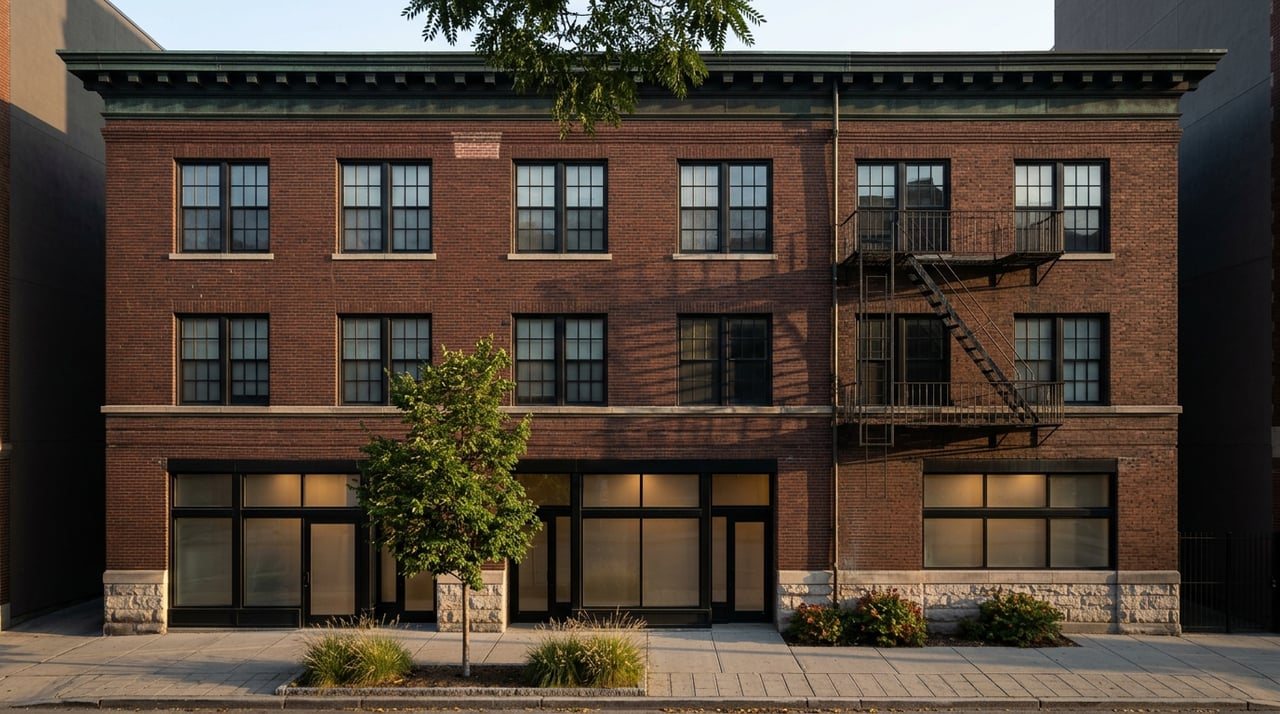
Oktoberfest sets up directly across from Cobbler Square Lofts at 1350 North Wells, and that building has its own version of this same pattern: old bones, new capital. Cobbler Square was originally built in the 1880s as the headquarters for Dr. Scholl's Manufacturing Company, a sprawling complex of nearly 30 interconnected buildings before it was converted into residential lofts in 1985. In 2025, the 292-unit property traded hands for $88.25 million, purchased by JDL Development and Centaur Capital Partners, with plans that include continued unit renovations and potential new construction on the site.
A century-old shoe factory turned loft building just changed hands for eight figures at the same time the street in front of it picked up a second annual festival. Neither event caused the other, but they're both signs of the same thing: money and civic energy are landing on this particular stretch of Wells Street at the same time, not on opposite ends of the neighborhood.
The New Anchor Across From Second City
Festivals are two weekends a year. What fills the other fifty is a different question, and Wells Street answered part of it with Moon Star Kitchen & Bar, which opened at 1617 North Wells, right next door to longtime neighborhood pub Corcoran's Grill & Pub and directly across the street from Second City. Moon Star comes from Vaughan Hospitality Group, the same operators behind Corcoran's, which means the addition isn't an outside chain testing the market. It's an existing Old Town operator doubling down on the same block.
The menu leans into shareable plates with an elevated edge: caviar and lobster deviled eggs, crab wontons, romesco gnocchi. Happy hour runs Monday through Friday from 4 to 6 p.m., with $9 wines and $10 cocktails, which puts a genuine after-work option on a block that's historically been more about pub food and pre-show drinks before catching a set at Second City.
That's the piece that makes the festival calendar feel less like a seasonal spike and more like part of a broader shift. A merchants association investing in two annual weekends is one signal. An existing local operator opening a second concept on the same block, priced for regular use rather than special occasions, is a different kind of signal, and it points the same direction.
What This Means If You Live Here
If you've been in Old Town for a few years, the practical shift is straightforward: plan around two street closures a year instead of one. June belongs to the art festival, which is the bigger draw and the one worth clearing your weekend for if you haven't been. September now belongs to Oktoberfest, which is smaller in scale but has already proven it's not a one-off, and the House of Glunz kickoff suggests the merchant community sees it as worth protecting.
For an evening out that doesn't involve a festival at all, Moon Star gives Wells Street its first new anchor in a while that's built for a regular Tuesday, not just a big weekend. Paired with Corcoran's next door and Second City across the street, that stretch between Schiller and North Avenue has more reason to hold your attention on an ordinary night than it did two years ago.
None of this changes what Old Town is. It changes how often the street asks you to show up, and what's waiting for you when you do.
If you're watching Old Town for reasons beyond a Friday night out, whether that's tracking what a loft at Cobbler Square might be worth after its recent sale or figuring out what a Wells Street address actually buys right now, Spacematch Inc. knows this corridor block by block. We Spacematch you to the right home.
